
Sunglasses for Your Face Shape: A Fit Guide Before You Buy
Compare sunglasses by face shape, frame weight and visual proportion. Build a shortlist, then check physical comfort before you buy.

Written by
The Aurcue editorial team writes practical guides to personal style, color, outfits, hairstyles, and glasses. Articles use source research and quality review, with product guidance checked against the current Aurcue experience.
By Aurcue Editorial Team
To choose sunglasses for your face, start with two frame directions, add a third pair that offers a different look, and compare them using the same photo or mirror view. Then try your favorites in person to check comfort before buying.
You can do this without settling on a face-shape label. Use the worksheet below to record what you like about each pair's brow line, rim weight and overall proportion. Your goal is a shortlist you can act on today, with a reason to try each candidate.
Start with two frame directions
Pick one feature you want to explore. If your jaw looks angular and you want a softer frame outline, start with round or oval sunglasses. If you prefer more definition around a softer facial outline, try a rectangle or geometric frame. V SHADES and Art & Eyes offer these as styling directions, which you can test against your own preferences. V SHADES face-shape guide, Art & Eyes sunglasses guide
Choose two directions you would consider wearing, such as a thin oval and a soft rectangle. For your third candidate, change one feature that interests you, perhaps a thicker rim or a gently upswept corner.
For a longer explanation of face outlines and visual frame proportions, see our existing glasses guide. Use the shortlist below for the sunglasses you might buy. Glasses by face shape
Build a sunglasses shortlist
If you are deciding how to choose sunglasses for your face shape, use the table to select your first two candidates. The starting directions draw on the sources below. The comparison column gives you a choice to investigate, and your own preference decides which stays on the list. V SHADES, Art & Eyes
| Face direction | A starting direction | A comparison to try |
|---|---|---|
| Round | Rectangular sunglasses for a more angular outline | A geometric or gently upswept shape, then note which amount of definition you prefer |
| Square | Thin round or oval frames for a curved outline | A rounded aviator, then compare how its lower curve looks beside your jaw |
| Oval | A rectangle with a clear outline | A geometric frame, then decide how much structure you want |
| Heart | Oval sunglasses | A cat-eye, then compare a rounded top edge with an upswept one |
| Diamond | Round sunglasses | An oval pair, then note how each outline sits visually beside your cheekbones |
| Oblong | A deeper, oversized frame | A shield or butterfly outline, then compare the amount of face each occupies |
If two rows sound familiar, take one candidate from each. Keep a frame you love on the shortlist even when it falls outside the suggested starting direction.
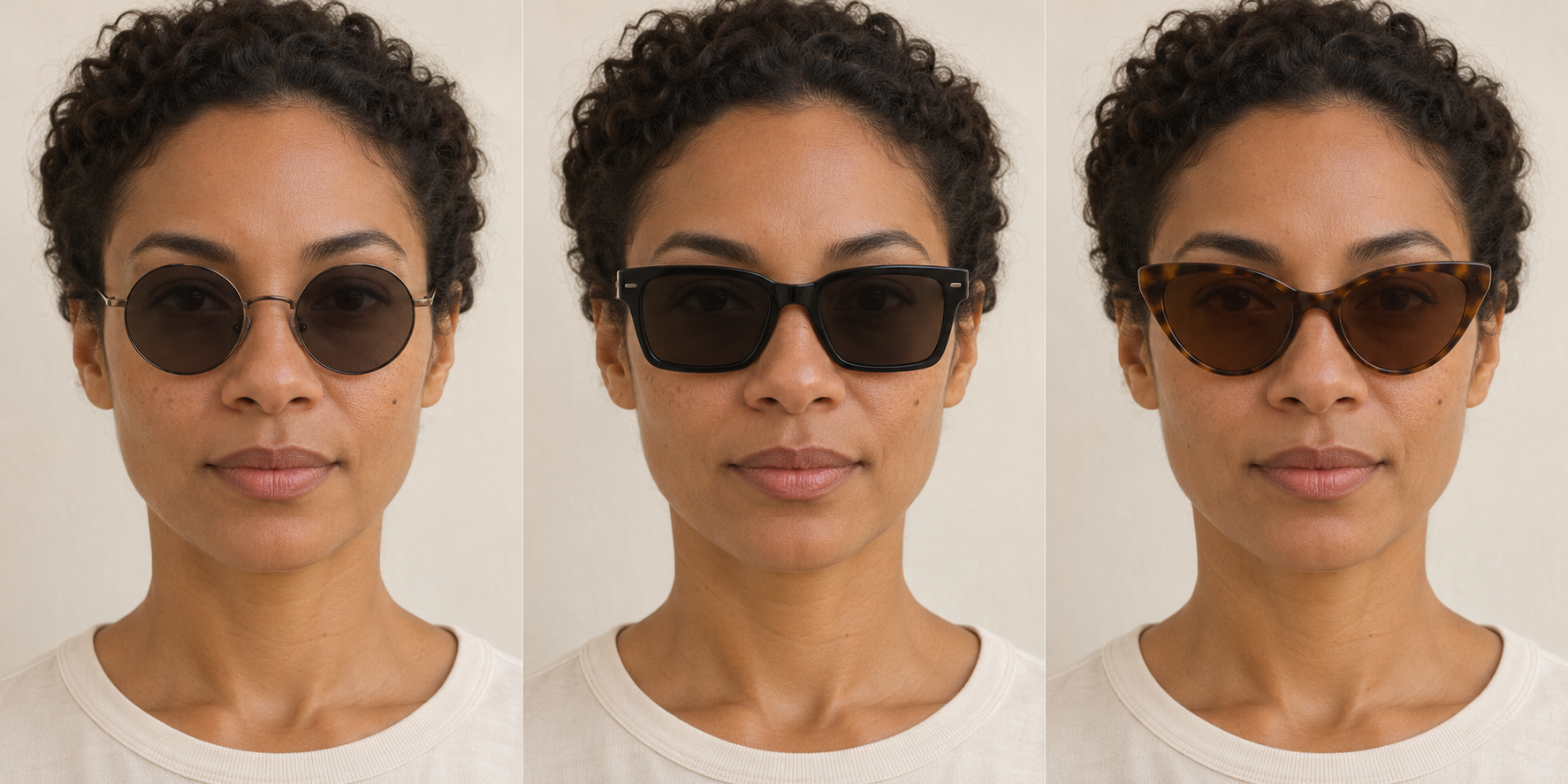
AI-generated styling illustration showing three frame directions on a synthetic adult face.
Compare the same three things on every pair
Use a consistent front-facing view for each candidate. Keep the lighting, expression and face size similar so you can concentrate on the frame. Aurcue's current glasses-analysis examples use brow line, rim weight and color to explain changes in visual effect. Aurcue glasses-analysis overview
Look first at the brow line. Where does the top rim sit relative to your eyebrows? Decide whether you like the visible relationship, including how much eyebrow shows.
Then compare visible frame weight. Look at the thickness and color of the rims. Write down whether you prefer the frame to draw attention or sit more quietly around your features.
Finally, check overall proportion. Follow the outer corners and lower lens edges. Notice the space the sunglasses occupy across your face and down toward your cheeks.
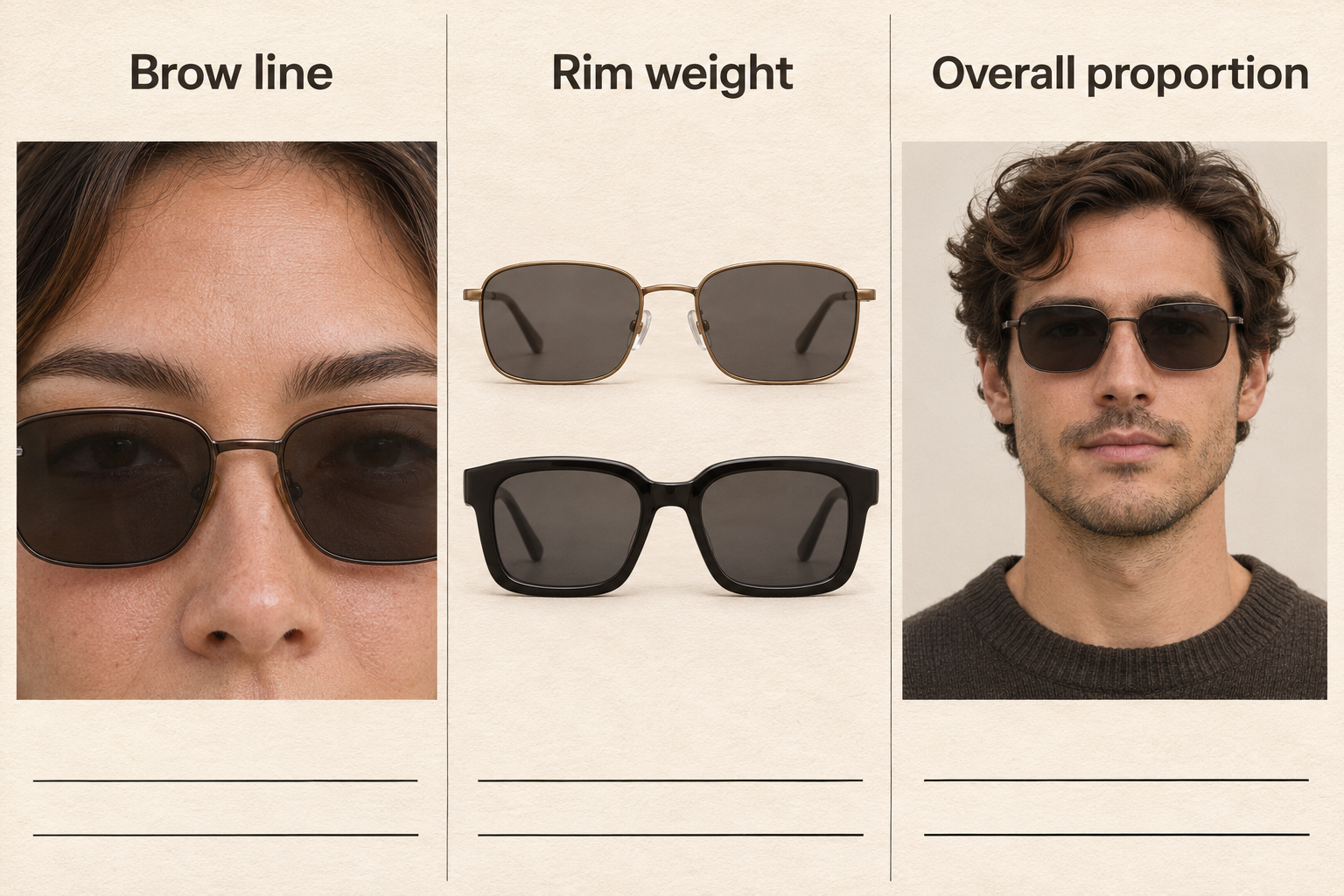
AI-generated styling worksheet. Use the blank lines for your own observations.
Copy this worksheet into a note. Give each candidate a shape, a color and a listing link so you can find the exact pair again.
| Candidate | Brow-line observation | Rim-weight observation | Overall proportion | My notes and next action |
|---|---|---|---|---|
| A, first direction | ||||
| B, second direction | ||||
| C, contrasting option |
A useful note might read, “B has the top edge I like, but I prefer A's thinner rim. Try a thinner version of B.” That gives you a specific next search. This worksheet is an editorial comparison exercise developed for this guide.
Make the physical fit check before buying
Put on the shortlisted pairs and check what happens while you wear them. Use these questions as a try-on checklist, drawing on Warby Parker's sunglasses-fitting guidance. Sunglasses fit checks
- Does the bridge feel comfortable on your nose?
- Do you feel pressure where the arms touch your temples or behind your ears?
- Does the pair slip when you look down or turn your head?
- Do the lower rims contact your cheeks when you smile?
Record any discomfort beside the exact candidate. Ask an optician to assess fit and possible adjustment when a pair presses, slips or leaves you uncertain. Art & Eyes recommends professional fittings and consultations for comfort and visual clarity. Art & Eyes fitting guidance
A photo comparison describes appearance. Physical fit, millimeter dimensions, bridge comfort, prescription requirements and lens suitability need separate confirmation. Aurcue states these limits on its glasses-analysis page and directs users to an optician for physical fit. Photo-analysis limitations
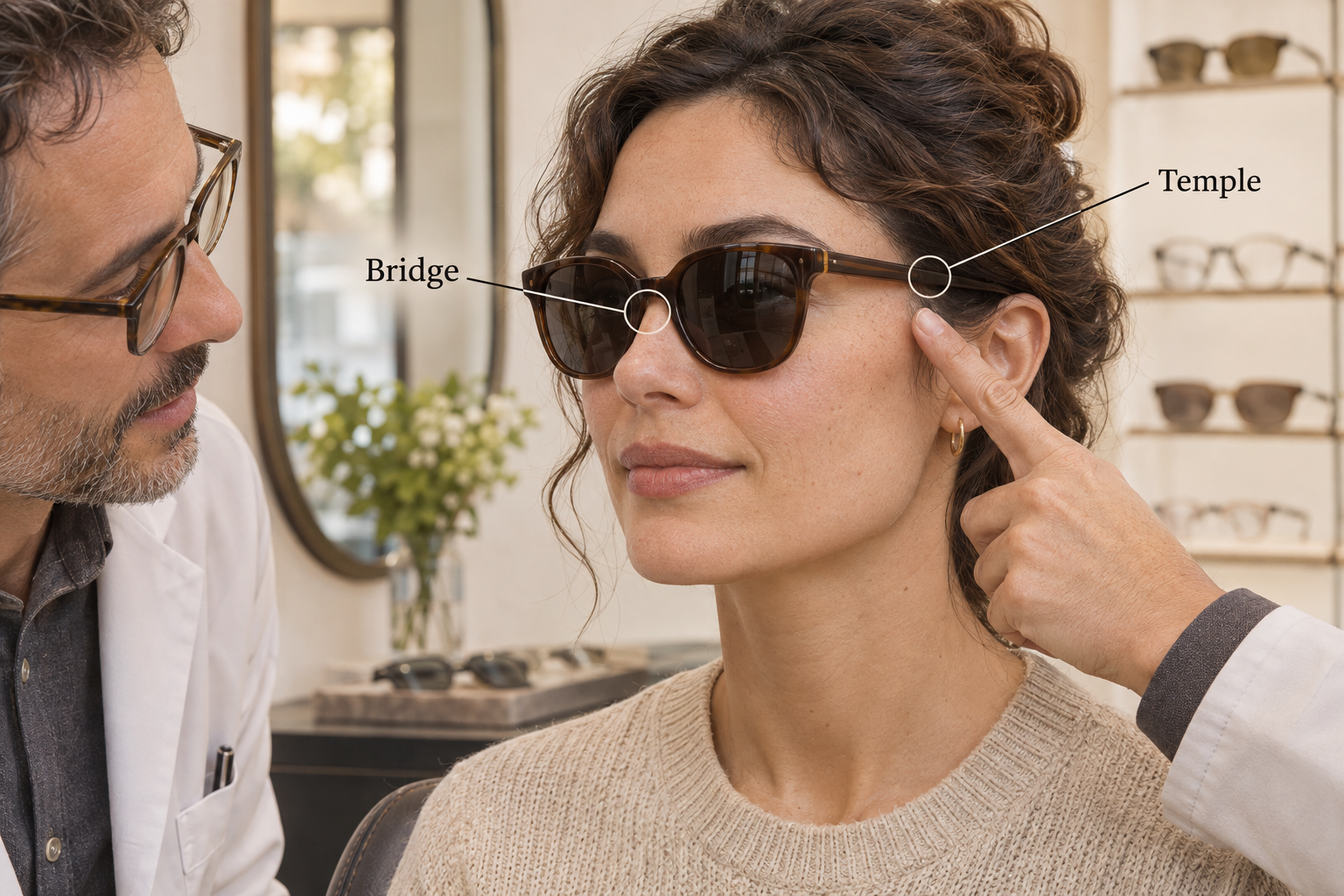
AI-generated fitting illustration. The marked areas show where to check contact while wearing a pair.
Use a photo-based shortlist
Aurcue's glasses analysis offers recommendations for frame shapes, colors, materials and visual weight from your photo. If you already have candidate frames, the separate virtual try-on choice lets you upload a selfie and up to three frame images for comparison on the same photo. Review the current credit requirements before generating. Current features and credit information
Use your worksheet to turn a recommendation into a next step. You might look for a thinner rim in the shape you preferred.
Questions before you order
What if I do not know my face shape?
Choose two outlines you are curious about, such as an oval and a rectangle. Fill in the same worksheet for both, then add a third option based on what you notice. You can keep the comparison specific by writing “I prefer the curved lower edge” or “I want more eyebrow visible.”
Can the same shape work differently in a thicker frame?
Yes. Rim weight is one of the visual properties to compare alongside shape and color. Try a thinner and a thicker version of a similar outline, keeping the photo view consistent, and note which you prefer. The current product examples also show rim weight as part of the comparison. Frame-comparison examples
Can a photo confirm that sunglasses fit?
A photo can help you compare the visible outline and proportions. Comfort and bridge fit require wearing the pair, and an optician can help assess physical fit or prescription needs. Aurcue's stated photo-analysis limits
When you are deciding how to choose the right sunglasses, finish with one completed worksheet row. Add the exact pair, what you liked, any question about fit, and your next action. Choose a candidate to try in person or take the shortlist to an optician.
Sources
- V SHADES supplies the face-shape starting directions used in the shortlist. Sunglasses face-shape guide
- Art & Eyes supplies square- and oval-face suggestions and professional-fitting guidance, published July 2, 2024. Choosing sunglasses and arranging a fitting
- Aurcue's current product page supplies the feature, credit and limitation statements. Glasses-analysis product information
- Warby Parker supplies the bridge, ear, cheek and stability checks, with guidance that also applies to sunglasses. How sunglasses should fit