
How to Style a Sweater Vest: Shirts, Tees and Layers
Style an owned sweater vest with a shirt, tee or thin knit. Compare necklines and hems, reduce bunching, and choose an outfit before buying more.

Written by
The Aurcue editorial team writes practical guides to personal style, color, outfits, hairstyles, and glasses. Articles use source research and quality review, with product guidance checked against the current Aurcue experience.
Choose what goes under your sweater vest first: a button-down shirt, a tee, or a thin mock-neck or long-sleeve knit. Check that the armholes leave room for that layer. Then put on the bottoms and shoes you already planned to wear, and compare the collar and hems in the complete outfit. A knitted sweater vest is a layering piece, not a tailored waistcoat, so waistcoat button rules do not apply. You do not need a new wardrobe for this exercise. Keep one vest, one pair of bottoms, and one pair of shoes fixed. Changing only the under-layer helps you find a combination that feels comfortable and intentional.
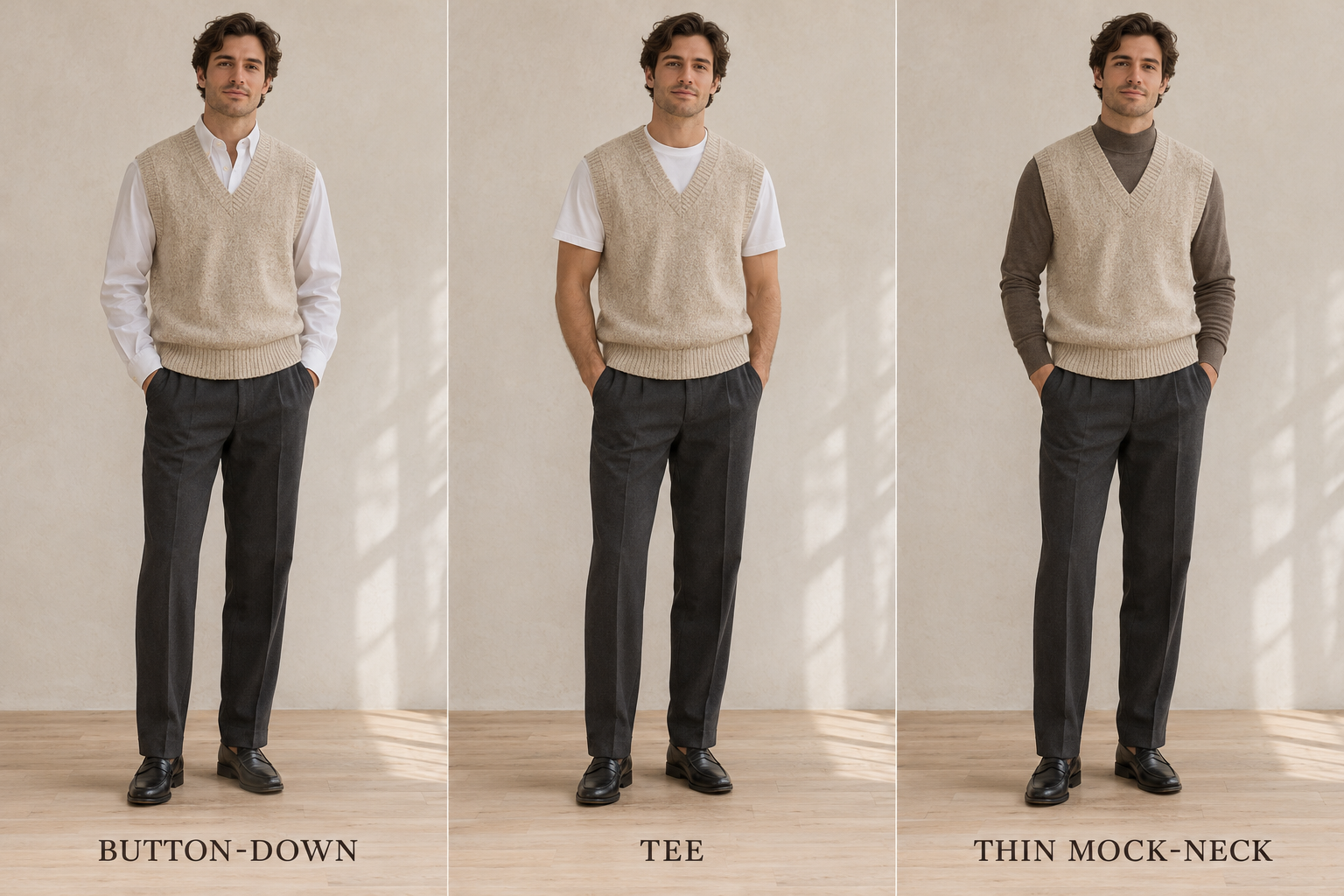
Illustration: only the under-layer changes. This is editorial imagery, not an Aurcue output or user result.
Start with your vest and one pair of bottoms
Before choosing a base layer, check the vest neckline, hem, and room around the armholes. A deep V exposes more of the layer below. A long vest can cover a tucked shirt, while a shorter one may leave the shirt hem visible. Make sure the under-layer does not force the knit outward.
Keep your bottoms and shoes the same during each try-on. That makes the under-layer the only meaningful change.
| Under-layer | Detail to compare |
|---|---|
| Button-down shirt | Visible collar, cuffs, and shirt hem |
| Tee | Casual neckline and short-sleeve outline |
| Thin mock-neck or long sleeve | More coverage at the neck and arms |
These are options to test, not guarantees for a dress code or a particular body type. Guides from Onpost and Chic Pursuit also show that sweater vests can work with more than one type of base layer and outfit direction.
With a button-down: settle the collar and shirt hem
Put the button-down on first, smooth it, and then add the vest. If the collar sits cleanly outside, leave it there. If it bunches against the vest neckline, try placing it inside where both garments allow. Do not force a wide or structured collar into a narrow opening.
Compare two hem arrangements while keeping the vest untucked. Let the shirt hem show below the knit, then try tucking the shirt and smoothing any folds. Choose the outline you prefer if it stays comfortable. There is no universal amount of shirt hem that must remain visible. If neither arrangement settles, try a less bulky shirt rather than pulling the vest tighter.
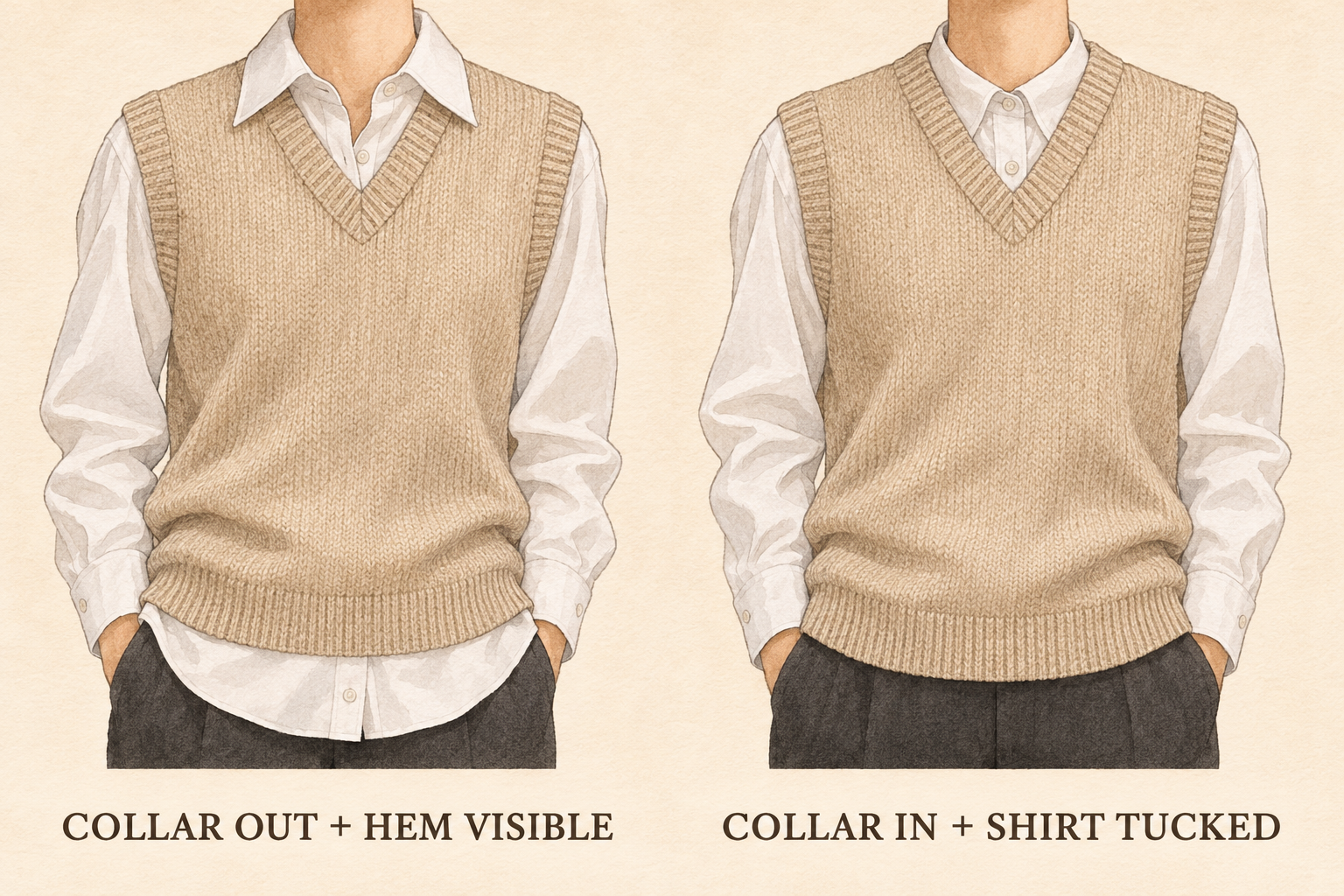
Illustration: two collar and shirt-hem arrangements with the same vest.
With a tee: use the sleeve edge as the main detail
Replace the shirt with a plain tee, then put on the same vest, bottoms, and shoes. The tee removes the visible collar and cuffs, so its sleeve edge becomes the main detail around the armholes. Check that each sleeve hangs freely instead of catching under the knit. Also look at the two necklines together. A high or thick tee collar may sit close to the vest edge, while a more open tee neckline may leave a strip of skin between the layers. Neither effect is automatically better.
If you prefer a graphic tee, treat the print as a deliberate focal point. Check how much of it the vest covers and whether the remaining shapes compete with the knit pattern. A graphic is a taste choice, not a styling error. The same comparison works when deciding how to style sweater vests with different necklines.
With a thin knit: check the neckline and armholes
A light mock-neck or long-sleeve knit adds coverage without introducing a shirt collar. Use one you already own if possible. Put it on under the vest, then raise and lower your arms and sit down. These movements show whether the under-layer stays smooth enough for your comfort or gathers at the armholes and waist.
If the layers bunch, change one input at a time. Try a thinner base layer, or use a vest with more available room. Avoid treating the discomfort as something you must tolerate for the outfit. The garment maker xtclothes likewise treats base-layer thickness, neckline, and armhole space as practical parts of layered-vest styling. This is garment advice to inspect in your own clothes, not a sizing formula or a claim about warmth.
Use the three-look comparison card
Now compare the three versions without rating your body or deciding which one is universally flattering. Record only what you can observe: the collar, the hem, how the layers feel, and what you would change.
Here is an illustrative example using one neutral V-neck vest, straight trousers, and the same shoes throughout:
| Fixed vest and bottoms | Under-layer | Collar note | Hem note | Comfort note | Keep or change |
|---|---|---|---|---|---|
| Neutral V-neck vest and straight trousers | White button-down | Collar visible and tidy | Shirt tucked, vest untucked | Fabric gathers slightly when seated | Try a lighter shirt |
| Same vest and trousers | Plain crew-neck tee | Tee edge follows the V without touching it | Both hems untucked | Sleeves move freely | Keep for a casual outfit |
| Same vest and trousers | Thin mock-neck | Neckline stays separate from the V | Base layer tucked | Comfortable standing and seated | Keep for more coverage |
Your notes may lead to a different choice. Save the blank version and fill it in while wearing each outfit.
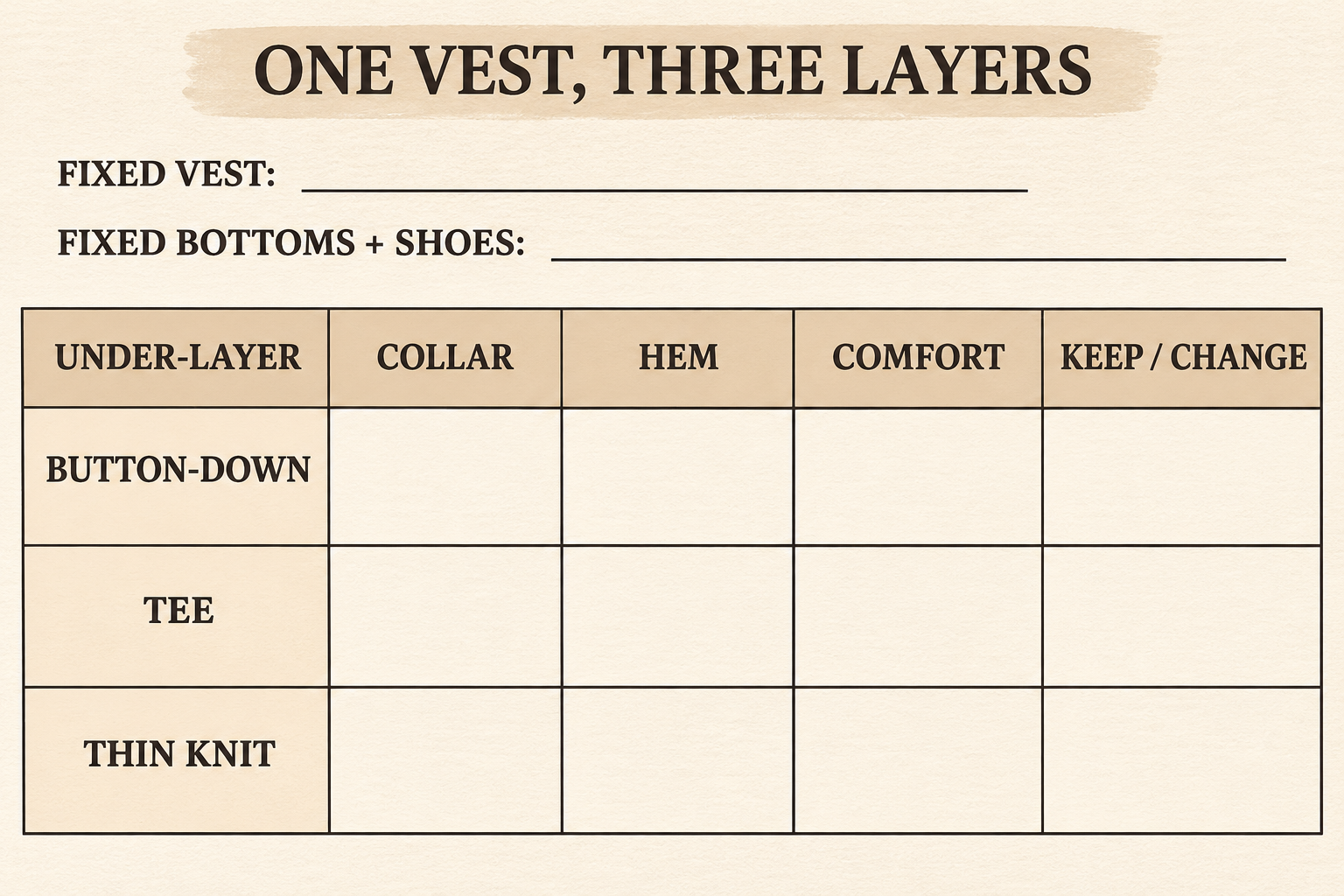
This editorial worksheet records observations, not attractiveness scores or body types.
If the issue seems larger than the vest and base layer, use the outfit proportion audit as a separate, broader check of the whole outfit.
Choose an outfit before buying another layer
Keep the combination that meets the needs you can see and feel. If none works, name one specific gap before shopping, such as a shirt with less fabric at the waist or a thinner long sleeve. This keeps the problem tied to the vest you own instead of turning it into an open-ended shopping list.
The current Aurcue outfit report can review one outfit photo for visible fit, proportion, color, and practical swaps. It does not automatically compare the three outfits in this exercise, measure fabric drape, guarantee fit, or generate this exact sweater-vest combination.
FAQ
Do you tuck a sweater vest in?
Tuck it only if the garment, waistband, and intended look can accommodate the extra knit. Compare a small or full tuck with leaving the vest out, but do not force a bulky vest into a waistband. Check the front and side, then sit down before deciding.
Are sweater vests formal?
A sweater vest does not make an outfit formal by itself. The other garments, shoes, knit texture, and setting affect how it reads. Follow the actual dress code rather than assuming a vest will satisfy it. For polished-casual dressing, compare a neat button-down with a tee and choose for the occasion.
What can I wear under a sweater vest?
Start with a button-down, tee, or thin mock-neck or long-sleeve knit. A button-down adds a visible collar and cuffs. A tee gives you a simpler short-sleeve outline. A thin knit adds arm and neck coverage. Keep your vest, bottoms, and shoes fixed while you try each one, then compare the collar, hem, and comfort before buying anything else.
Sources and method
Sources read for this article include Onpost, Chic Pursuit, xtclothes, and the Aurcue outfit report page. The comparison card is an editorial exercise, not a user study or validated fit measurement.
By Aurcue Editorial Team
The Aurcue editorial team writes practical guides to personal style, color, outfits, hairstyles, and glasses. Articles use source research and quality review, with product guidance checked against the current Aurcue experience.