
How to Cuff Jeans for Men: Three Folds to Try With Your Shoes
Learn three ways to cuff men's jeans, compare each fold with your shoes, and use a simple outfit-photo check before changing your hem or buying another pair.
Written by
The Aurcue editorial team writes practical guides to personal style, color, outfits, hairstyles, and glasses. Articles use source research and quality review, with product guidance checked against the current Aurcue experience.
Put on the shoes you plan to wear, then turn each jean hem up once. Check that the fold lies flat, feels comfortable, and looks even on both legs. If the jeans still cover too much of the shoe, try a second fold. Use a pinroll only when you also want to narrow the leg opening and the fabric can fold without forming a thick ring.
No cuff height works for every jean and shoe. Compare the fold with the hem left down, and undo it if the uncuffed version looks or feels better.
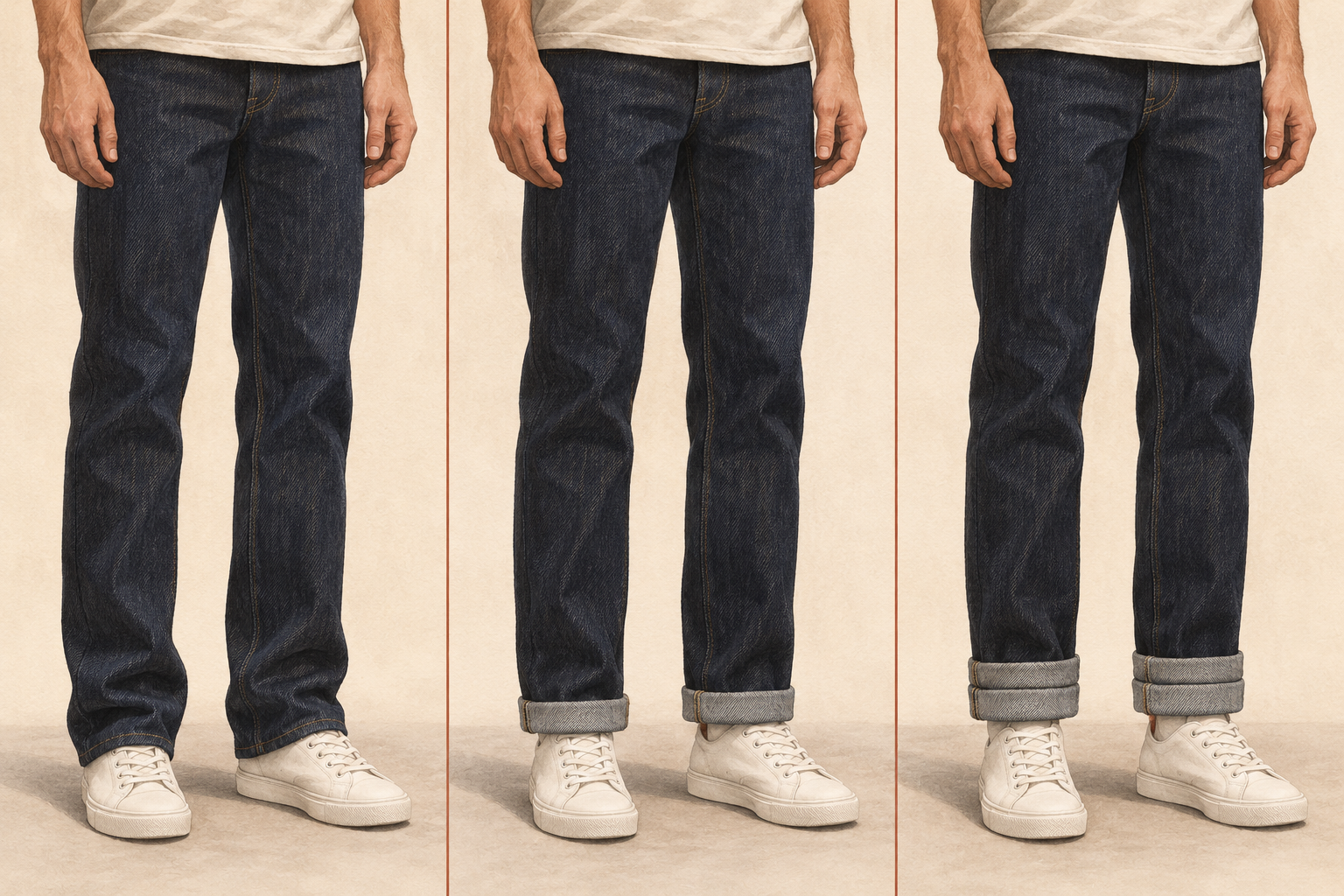
Original editorial illustration. It explains the fold comparison and is not an Aurcue report or a physical fit test.
Quick answer: put your shoes on, then try one fold
Stand in front of a full-length mirror with both shoes on. Smooth each leg, turn the hems upward once, and match their depth. Walk a few steps and sit down. The cuffs should stay in place without squeezing your ankles or pulling the legs upward.
Lower one cuff to compare the folded and uncuffed sides. Check the shoe opening, the denim resting on the shoe, and the fold's weight. If one cuff works, stop there.
Check the leg opening and spare length first
Spread the hem flat before you fold it. You need enough spare length to turn up the fabric without making the whole leg feel short or tight. You also need a leg opening that can accept the extra layers.
Keep the hem down when:
- the jeans already end where you want them to;
- one fold creates a stiff, bulky ring;
- the cuff restricts the opening or catches against the shoe; or
- the two legs refuse to sit at the same level.
A photo cannot measure your inseam, fabric stiffness, or alteration amount.
Three folds and when to try each
Lee's denim guide treats the single cuff, double cuff, and pinroll as different methods. The first two mainly raise the hem. A pinroll also takes in excess fabric at the opening.
| Method | How to do it | What changes | Try it when |
|---|---|---|---|
| Single cuff | Turn the hem up evenly once, then smooth the front, side, and back. | Raises the hem with the least added bulk. | You want a small, easy-to-undo change. |
| Double cuff | Make a single cuff, then fold that band upward once more. | Raises the hem farther and creates a thicker edge. | The second fold still lies flat and does not tighten the opening. |
| Pinroll | Pinch excess fabric at the inner seam, fold the pinch flat against the leg, then roll the hem twice to hold it. | Raises the hem and narrows the opening. | A straighter or roomier opening benefits from a controlled taper. |
Single cuff
Turn the hem up once, work around the leg, and flatten any twist. Check the side view too, because an even front can hide a higher fold at the back. For someone learning how to cuff jeans for guys, this makes a useful first test because it changes little and is easy to reverse.
Double cuff
Repeat the single fold once. Do not force the second turn if the denim becomes rigid or the opening presses against your ankle. The double cuff creates more visible weight than the single cuff, so judge it with the shoes on rather than against a bare foot.
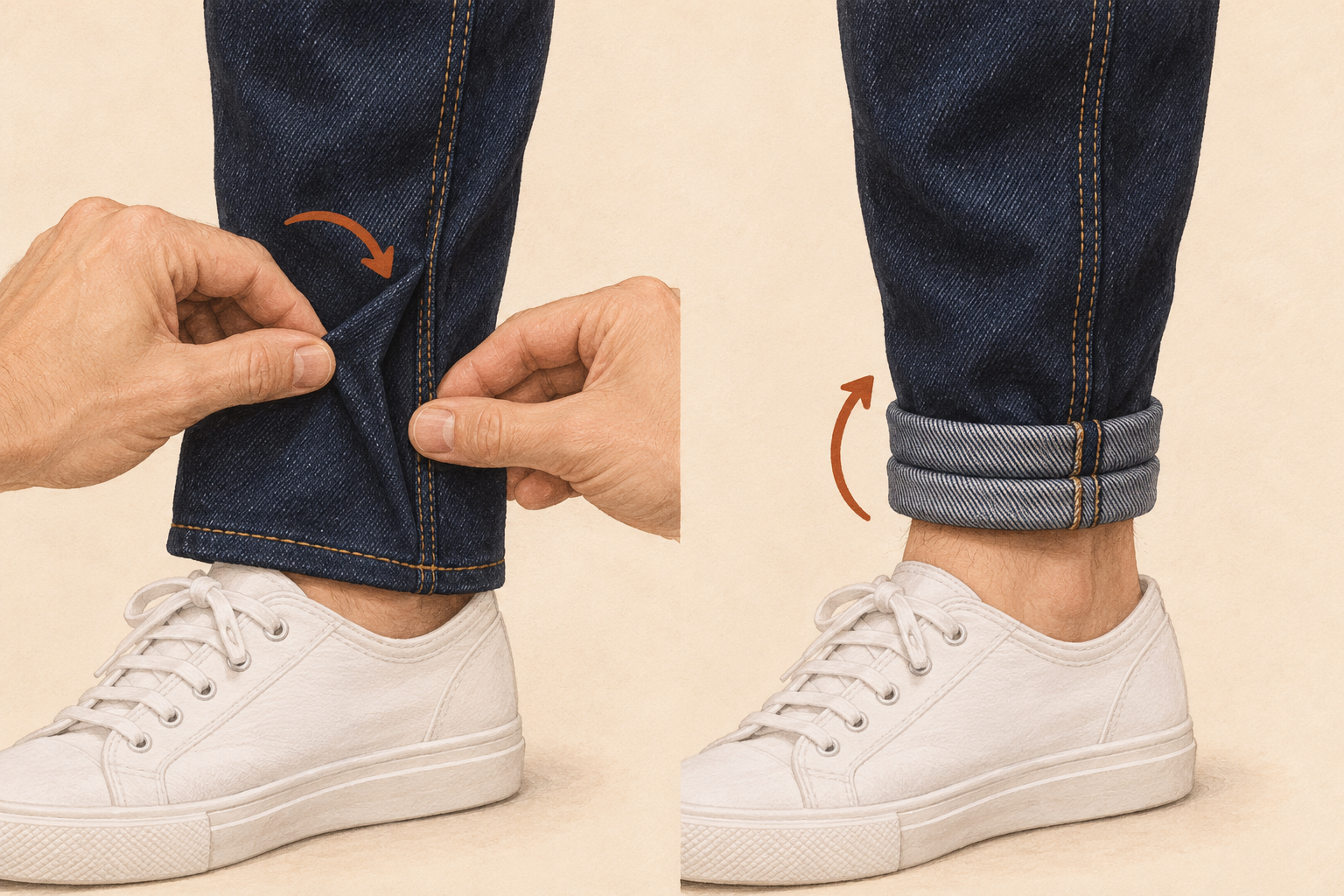
Original editorial illustration based on the sourced pinroll sequence. The fold narrows the opening before the hem is rolled.
Pinroll
At the inner seam, pinch only the extra width you want to remove. Fold that small section flat against the inside of the leg, keep it in place with your fingers, and roll the full hem upward twice. The rolls secure the folded section.
The result is a shorter hem with a narrower opening. On jeans that already taper or use heavy denim, the extra fold may feel crowded. If the pinroll twists the seam, squeezes the ankle, or will not hold, use a regular cuff or leave the hem down.
Compare the cuff with the shoes you actually wear
Check what the denim does around your footwear in front and side views. No cuff is mandatory for a particular shoe.
| Shoe on your feet | What to inspect | A useful comparison |
|---|---|---|
| Low-top sneaker | Does the hem hide the shoe opening? Does the cuff leave a clean break above it? | Compare hem down with one fold first. |
| Bulkier sneaker | Does a thick cuff compete with the shoe's visual weight? | Compare single and double cuffs without changing the rest of the outfit. |
| Ankle-height boot | Does the cuff catch on the boot shaft or stack above it? | Compare the cuff with the hem down and choose the cleaner, more comfortable line. |
Sock or ankle exposure depends on your preference and the weather. If you change shoes, run the comparison again. A cuff that works with a low sneaker may interact differently with a boot shaft.
When an uncuffed hem is the better result
Undo the cuff when the fabric bunches, the opening feels restricted, the folds keep drifting, or you prefer the original length. If the hem looks and feels better down, keep it down.
If the jeans have much more spare length than you want and every fold looks bulky, a tailor can discuss permanent hemming. Cuffing and rolling are reversible; hemming is not. Ask the tailor to assess the jeans and your preferred shoes rather than cutting the fabric yourself or relying on a universal alteration amount.
For a broader look at garment length, volume, and visual weight, read Aurcue's guide to auditing outfit proportions.
Do a same-outfit photo check
This editorial exercise helps you compare, but it does not measure the jeans or produce a fit score:
- Fix your phone position and camera height.
- Photograph the jeans uncuffed with your chosen shoes.
- Add one cuff and take another photo without changing the outfit.
- Compare ankle bulk, shoe-opening coverage, and whether both cuffs match.
- If needed, photograph one other cuff without changing the top or shoes.
Aurcue does not automatically rank these photos or calculate an exact cuff height.
Want feedback on the whole look? Aurcue's outfit report reviews one clear outfit photo for visible fit, proportion, silhouette, color balance, shoe weight, and practical swaps. Check the jeans in person first, then use the report as optional outfit-level advice. If you need help preparing the image, follow the photo guide for AI style reports.
FAQ
How many times should I roll my jeans?
Start with one fold. Add a second only if you need more length taken up and the denim still lies flat. More rolls can create bulk.
Is pinrolling the same as cuffing?
Pinrolling is a cuff that also narrows the opening. Fold excess fabric at the inner seam, then roll the hem to hold it. A single or double cuff raises the hem without taking in the opening.
Can I leave my jeans uncuffed?
Yes. Leave them down when the original length works, a cuff feels tight, or the added fabric looks heavy around the shoe.
Can an AI outfit photo tell me the exact cuff height?
No. A photo-based outfit report can comment on visible proportion and shoe weight, but it cannot measure an exact cuff height, inseam, or fabric stiffness. Make the physical fold yourself and check comfort before using photo feedback.
Sources and method
This guide uses desk research from Lee's current cuffing and pinrolling instructions and the verified scope of Aurcue's one-photo outfit report. The same-outfit photo check is an original editorial exercise. The Aurcue Editorial Team did not claim a physical wear test or tailoring qualification for this article.