
What Color Suits Me Quiz vs Photo Analysis
Compare what-color-suits-me quizzes with photo-based AI color analysis, including when each method is useful, what signals matter, and how to choose the right approach.
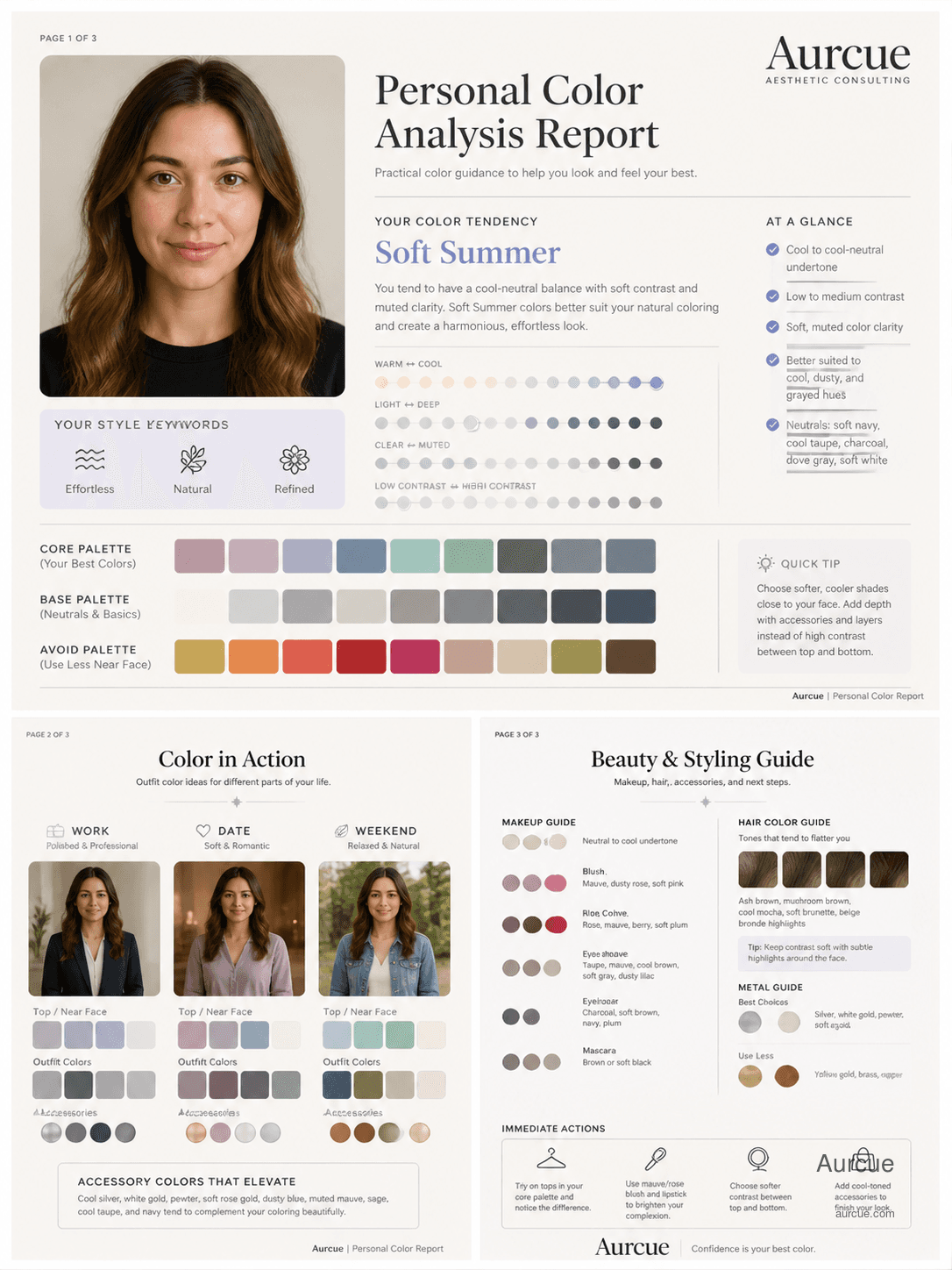
If you search "what color suits me," you usually find two kinds of answers: a quiz or a photo-based analysis. Both can be useful, but they solve different problems. A quiz is quick and easy. Photo analysis can be more specific because it reads visible color signals from the image itself.
Key takeaways
- Quizzes are good for discovery: They help people learn vocabulary such as warm, cool, bright, muted, soft, and high contrast.
- Photo analysis is better for visible signals: It can look at skin, hair, eyes, contrast, and how colors behave near the face.
- Neither should be treated as magic: Lighting, camera white balance, makeup, and hair dye can change the read.
- The best answer is practical: The user needs wearable colors, makeup tones, neutrals, and avoid colors.
Quotable definition: A color quiz asks what you believe about your coloring; photo analysis reads visible color signals from an uploaded image.
How a color quiz works
A color quiz usually asks questions about eye color, hair color, skin undertone, jewelry preference, whether you tan or burn, and which colors people compliment. It may then map your answers to a seasonal color family such as spring, summer, autumn, or winter.
This can be helpful for learning the category. It is also low effort. The downside is that people often answer based on memory, preference, or old advice. Someone may choose "warm" because they like gold jewelry, even if their best clothing colors are cooler or more neutral.
How photo analysis works
Photo analysis starts with the image. It can evaluate visible contrast, warmth or coolness, hair depth, eye clarity, skin-to-hair relationship, and how much color intensity the face appears to carry.
This does not mean the result is always perfect. A warm bathroom light can make skin look warmer. A beauty filter can blur undertone and contrast. Heavy makeup can change the visible read. A useful AI report should mention these limits and still give practical recommendations.
Quiz vs photo analysis
| Method | Best for | Main weakness | |---|---|---| | Color quiz | Fast learning and fun category discovery | Depends on self-reported answers | | Photo analysis | Practical palette, makeup, hair, and outfit decisions | Depends on photo quality and lighting | | Human consultant | Deep interpretation and draping | Higher cost and scheduling friction | | Saved inspiration images | Style direction and taste | May not match the user's actual coloring |
If the goal is curiosity, a quiz is enough. If the goal is deciding what to wear, buy, or avoid, photo analysis is usually more useful.
What the final answer should include
A good answer to "what color suits me" should not stop at "you are autumn" or "you are winter." It should explain:
- Best neutrals: White, cream, black, navy, charcoal, camel, taupe, brown, or olive.
- Accent colors: Clear, muted, warm, cool, deep, light, or soft color families.
- Makeup colors: Lip, blush, eye, and bronzer directions.
- Hair color guidance: Safer warmth, depth, and contrast.
- Avoid colors: Colors that may make the face look tired, flat, harsh, or dull.
The practical answer matters more than the label.
Best photo for color analysis
Use a front-facing portrait in natural light. Keep skin, eyes, and hair visible. Avoid heavy filters, colored lamps, strong backlight, sunglasses, and dramatic makeup when checking natural coloring.
If the first result feels off, try one more photo in better light before assuming the analysis is wrong.
Frequently Asked Questions
Is a what-color-suits-me quiz accurate?
A quiz can be directionally useful, but it depends on self-reported answers. It is best for learning color vocabulary and getting a first guess, not for making final wardrobe or makeup decisions.
Is photo color analysis better than a quiz?
Photo analysis can be more practical because it reads visible contrast, hair depth, eye clarity, and undertone clues from the image. It still depends on photo quality and lighting.
What should a color analysis result tell me?
It should tell you your likely temperature, contrast, clarity, best neutrals, accent colors, makeup tones, hair color direction, and colors to avoid near the face.
Can one photo identify my color season?
One clear natural-light portrait can support a useful first-pass analysis. Mixed lighting, filters, dyed hair, or heavy makeup can make the result less certain, so a second photo may improve confidence.
Summary
A color quiz is fast and helpful for discovery. Photo analysis is stronger when you want practical recommendations from visible signals. For most users, the best answer to "what color suits me" is a clear palette, makeup, hair, and avoid-color plan rather than a seasonal label alone.