
AI Facial Aesthetic Analysis: A Non-Medical Style Guide
A non-medical guide to AI facial aesthetic analysis from a portrait, focused on makeup, brows, hair framing, glasses, photo angles, and reversible style decisions.
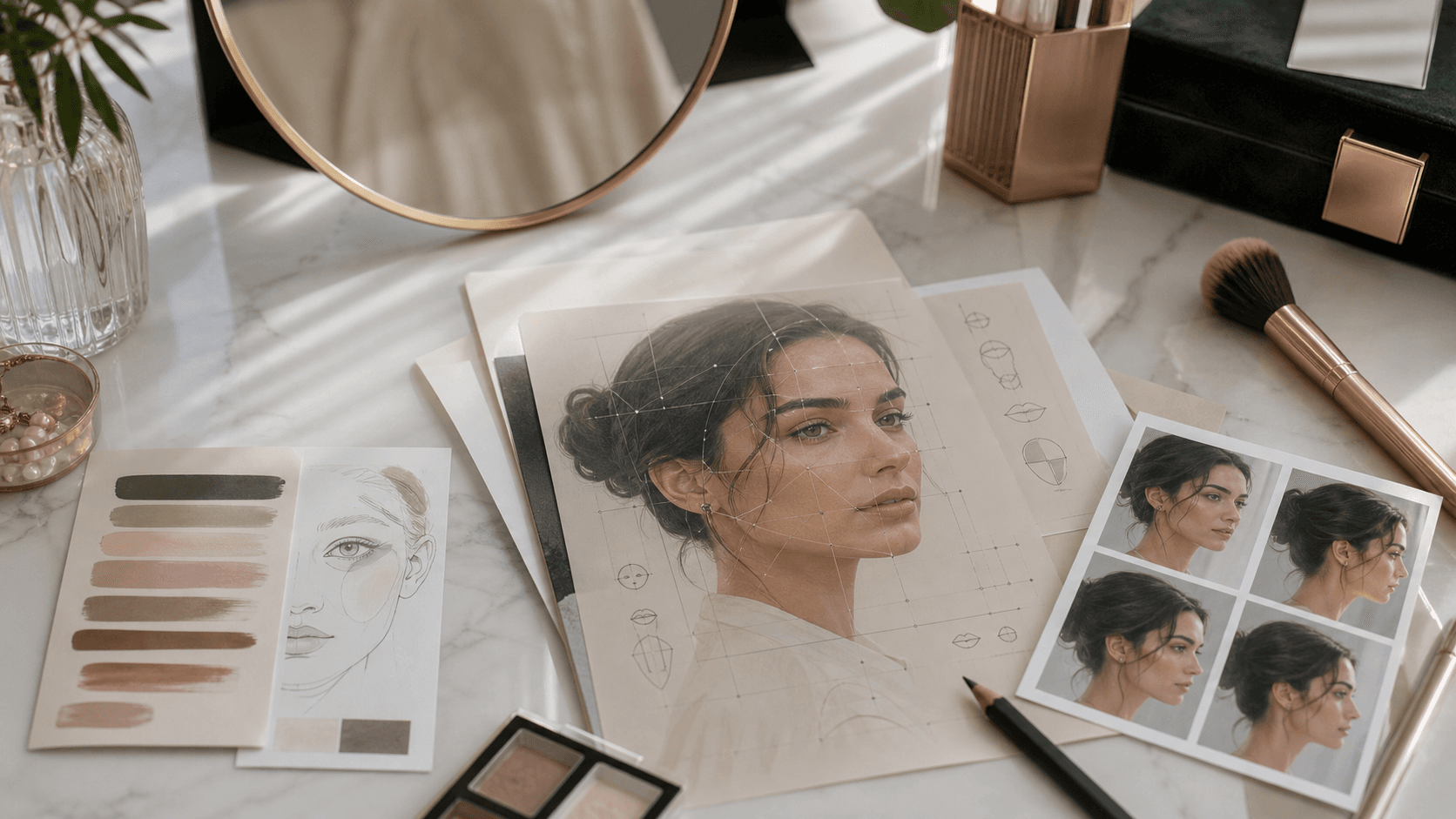
AI facial aesthetic analysis is a non-medical style review that reads visible portrait signals and turns them into reversible beauty, grooming, and photo decisions. A useful report should never diagnose, rate beauty, or recommend procedures; it should explain brows, makeup, hair framing, glasses, lighting, and angles in practical language.
Key takeaways
- Non-medical scope: The report should avoid diagnosis, surgery, injectables, skin-health claims, or beauty scores.
- Best use case: Use it for styling decisions before photos, shopping, makeup trials, glasses choices, or a salon visit.
- Most useful output: The answer should name what to adjust, why it helps, and how to test the change without altering the face.
- Photo requirement: A clear, front-facing portrait with visible brows, eyes, lips, jaw, and natural lighting produces the most useful read.
Quotable definition: Non-medical AI facial aesthetic analysis is style guidance for visible face presentation, not medical evaluation or cosmetic procedure advice.
What non-medical should mean
Non-medical analysis stays inside reversible presentation choices. It can discuss brow direction, makeup balance, hair volume, glasses shape, color contrast, and camera angle. It should not infer health, diagnose skin or facial structure, or suggest permanent changes.
This distinction matters because users often search for "face analysis" and expect actionable guidance. A safe answer reframes the task: the face is not a problem to fix; the styling system around the face is what can change.
Decision table: useful vs risky recommendations
| Report area | Useful recommendation | Risky recommendation to avoid | |---|---|---| | Brows | Shape, density, arch softness, fill direction | Medical or surgical brow advice | | Makeup | Lip, cheek, eye, or skin-finish focus | Claims about skin conditions | | Hair | Face-framing length, volume, parting, softness | Permanent change pressure | | Glasses | Frame weight, bridge balance, color direction | Vision or prescription advice | | Photos | Lighting, lens distance, chin angle, camera height | Beauty scoring or ranking |
Useful recommendations
- Brow shape and density direction - Explain whether stronger, softer, straighter, or more lifted brows support the face.
- Makeup focus points - Identify whether lip color, cheek placement, eye definition, or skin finish should carry the look.
- Hair framing notes - Connect layers, volume, and parting to the face-frame read.
- Glasses and accessory direction - Recommend visual weight, frame geometry, and color intensity.
- Lighting and camera angle suggestions - Explain how to make photos read more balanced without changing the person.
- Avoid notes - Name styling choices that overwhelm the face or create the wrong focal point.
Photo tips
Use a clear portrait with one person, even lighting, visible brows, eyes, lips, and jaw. Avoid heavy beauty filters, extreme shadows, sunglasses, and wide-angle distortion. A second photo from a slightly different angle can help when the goal is photo-angle advice.
Frequently Asked Questions
Is AI facial aesthetic analysis medical advice?
No. A responsible AI facial aesthetic analysis is not medical advice and should not diagnose conditions, evaluate health, or recommend cosmetic procedures. It should stay focused on reversible styling choices such as brows, makeup, hair framing, glasses, lighting, and photo angles.
What should a non-medical face analysis include?
It should include visible style signals, confident and uncertain observations, makeup direction, brow direction, hair-framing notes, glasses or accessory guidance, and photo-angle advice. The best output explains the reason behind each recommendation.
Can one portrait be enough for facial aesthetic guidance?
One clear portrait can be enough for a first-pass style read if the face is visible and lighting is even. More photos help when the user wants angle advice, hairstyle comparisons, or guidance affected by glasses, makeup, or lighting.
What should the report avoid?
The report should avoid beauty scores, attractiveness rankings, medical claims, diagnosis, surgery recommendations, injectables advice, or language that treats the face as defective. The useful scope is presentation, not correction.
Summary
AI facial aesthetic analysis should be non-medical, style-focused, and reversible. The useful answer covers makeup, brows, hair framing, glasses, lighting, and photo angles with clear reasoning, uncertainty notes, and practical next steps.